
The importance of raw material selection and its impact on mold design
The initial stages of designing an inflatable mold
Stress analysis and simulation of the inflation process
Before physically making the mold, it is necessary to use simulation software (such as Moldflow). These softwares allow engineers to virtually check the preform inflation process inside the mold. Stress analysis shows how thick the bottle wall is at different points and whether excessive thinning (thin spots) occurs or not. By using these analyses, the designer can identify and fix possible problems before cutting the metal. Temperature simulation also helps optimize cooling water paths. This will significantly save manufacturing costs and production line setup time and ensure the final quality of the polyethylene terephthalate product.
Choosing the right alloy for mold making
Choosing the metal material to make the blow mold of polyethylene terephthalate bottles has a direct effect on the life of the mold and the quality of the bottle surface. Aluminum alloys (such as 7075) or hardened tool steels are usually used. Aluminum has a high thermal conductivity and allows rapid cooling of the mold, which increases production speed. However, for very high volume production or bottles that require a very high surface finish, the use of tungsten steels or beryllium copper is recommended. Beryllium copper is an ideal choice for PET molds due to its excellent thermal conductivity and reasonable hardness, although it is more expensive than aluminum. The correct choice of material guarantees the durability of the mold against wear and pressure caused by inflation.
Cooling system and heat management in the mold
Heat management in the production process of polyethylene terephthalate bottles is the key to success. The cooling system must be able to quickly dissipate the latent heat stored in the plastic to stabilize the bottle shape. The design of the water channels should be spiral or congressional close to the surface of the cavity to maximize heat exchange. The lack of uniform cooling causes some parts of the bottle to cool down later and undergo warping. Also, the temperature of the cooling water must be carefully controlled. It is necessary to use ice makers and industrial chillers to maintain the water temperature within a certain range. An efficient cooling system reduces cycle time and greatly increases the productivity of the polyethylene terephthalate bottle production line.
Machining and precise manufacturing of mold parts
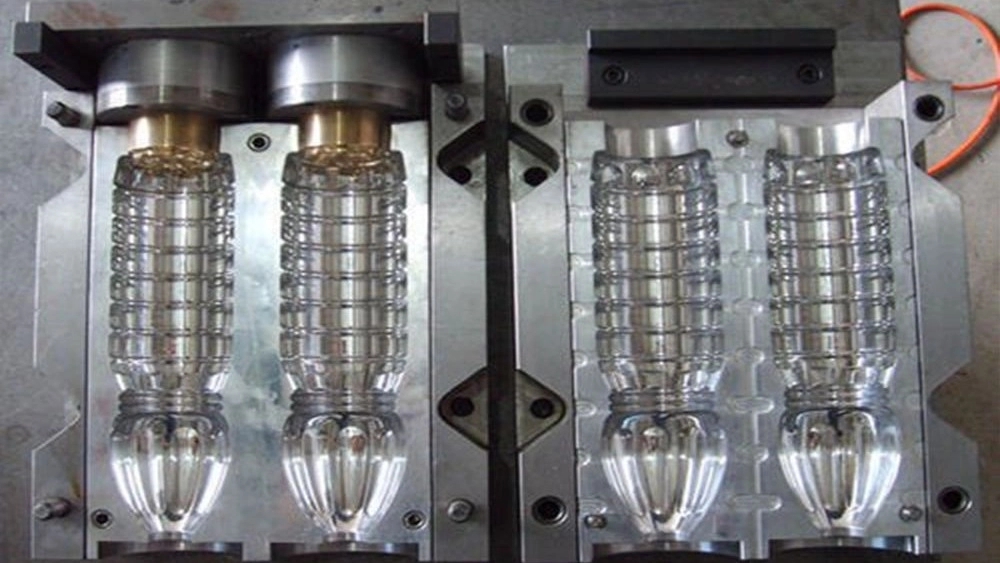
After the design is completed, the manufacturing phase begins using advanced CNC machines. Precision in the machining of the cavity and core is critical, as any dimensional error directly affects the volume and shape of the bottle. To create a texture or design on the body of the bottle, a laser or micro-water engraving process is used. Polishing and polishing of the internal surfaces of the mold is done to a very high degree of polishing (Mirror finish) so that the final bottle has a good transparency and shine. At this stage, the accuracy of the alignment of the mold halves is also checked to avoid air leakage and creating extra edges. Accurate manufacturing guarantees the quality of the final product.
Cutting and part removal mechanisms
In blow molding for polyethylene terephthalate bottles, there is usually a need for cutting mechanisms to remove the overflows or bottle mouths. These mechanisms can be designed as cutting needles or spring blades. The correct functioning of these mechanisms should be such that they cleanly separate the additions without damaging the bottle body. Also, the ejection system must be designed so that the cooled bottle can be ejected from the mold without deformation. In some designs, air pressure is used to eject the bottle to avoid any mechanical contact that could cause scratches. The coordination of these mechanisms with the high speed of the device is very important.
Quality control and final test of the mold
After the construction is completed, the mold must be subjected to rigorous tests. Installing the mold on the blowing machine and producing the prototype (First Shot) is the first step. At this stage, the thickness of the bottle wall is measured at different points with ultrasonic devices. Also, the geometric dimensions and volume of the bottle are compared with engineering standards. Checking the presence of air bubbles, weld lines, and small cracks is another quality control issue. If a problem is found, the necessary corrections are applied to the template. The final approval of the mold takes place when the manufactured product meets all the desired quality parameters for polyethylene terephthalate bottles.
Maintenance and repairs of inflatable molds
The lifespan of an inflatable mold depends on its proper maintenance. After each shift, thorough cleaning of the mold surfaces is essential to prevent chemical deposits or contaminants. Lubrication of moving parts such as pins and guides should be done periodically. Checking the health of water circulation systems and possible leaks should also be included in the preventive maintenance plan. Proper maintenance not only reduces the cost of heavy repairs, but also ensures that the quality of the polyethylene terephthalate bottles remains constant over time and that sudden stoppages of the production line are minimized.
conclusion
The design and manufacture of blow molds for polyethylene terephthalate bottles is a combination of art and advanced engineering. From choosing the right raw material to designing an efficient cooling system and precision machining, every step plays a key role in the final success of the product. With the growth of technology and the use of simulation software, it is possible to produce molds with very high accuracy and faster production speed. Compliance with the principles mentioned in this article will help manufacturers to provide high quality products, optimal production cost and customer satisfaction in today's competitive market. Investing in the correct mold design and construction guarantees success in the polymer packaging industry.