
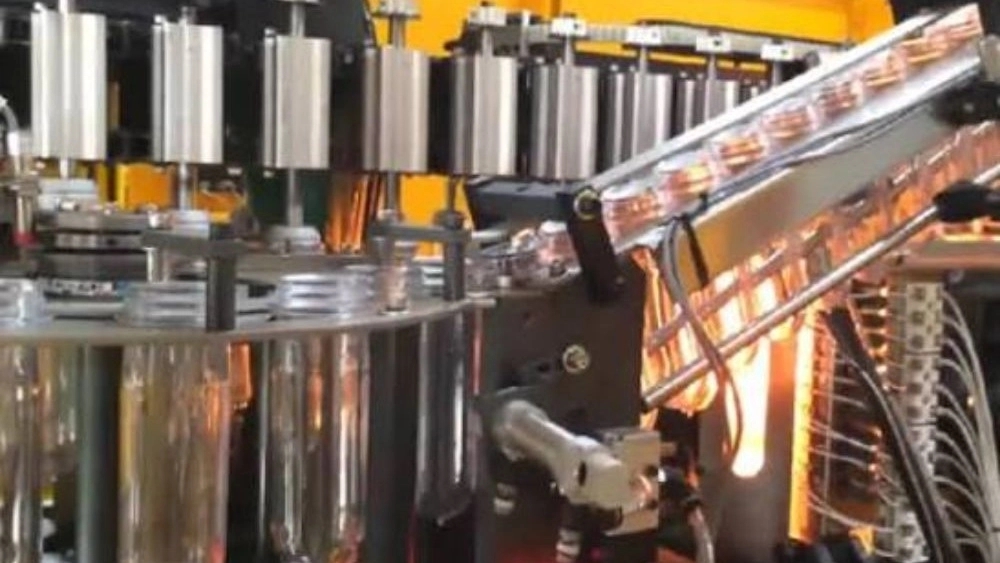
In the modern packaging industry, the production of polyethylene terephthalate (PET) bottles with the highest possible quality is one of the main concerns of beverage, detergent and food industry manufacturers. PET bottles have become a suitable alternative to glass and other polymers due to their transparency, chemical resistance and light weight. However, achieving high quality standards requires precise technical knowledge and the use of advanced equipment. Meanwhile, the role of PET blowing machine in determining the mechanical and appearance properties of the final product is undeniable. This article deals with a comprehensive review of how to improve the quality of the bottle using the latest technologies of the blowing machine and provides practical solutions to solve common challenges.
The importance of quality in the production of PET bottles
The quality of produced bottles directly affects product shelf life, customer satisfaction and company branding. A quality bottle should have uniform wall thickness, high transparency, resistance to internal pressure and no small air bubbles. Any defect in the manufacturing process can lead to cracking, deformation or leakage of the product. Using a high precision PET blowing machine is the first step to guarantee this quality. In addition, the optimization of the blowing process helps to reduce waste and increase the productivity of the production line.
Performance of PET blowing machine and its effect on product properties
To understand how to improve the quality, we must first understand the mechanism of the device. The PET blowing machine performs a process in which the preform is heated and pressurized with compressed air to form the final shape of the mold. Accurate settings of pressure, temperature and inflation time in this device are critical parameters.
Precise temperature adjustment in the PET blowing machine
One of the most important factors influencing the quality of the bottle is the temperature profile of the preform. If the temperature is too high, the polymer will soften too much and the bottle may tear at weak points or the wall may become too thin. Conversely, if the temperature is low, the plastic material will not stretch enough, leading to internal stresses and clouding of the bottle. Advanced devices are equipped with temperature control systems with infrared lamps that allow point-to-point temperature adjustment. The correct use of this feature in the PET blowing machine ensures that the material flows in the correct directions and achieves the desired thickness distribution.
The role of air pressure in bottle strength
The air pressure used in the two main stages of inflation (initial inflation and final inflation) determines the strength and precise shaping of the bottle. A lower pressure initial blow causes the preform to stretch, while a very high pressure final blow (typically between 30 and 40 bar) causes the plastic to adhere precisely to the mold walls and create fine details. Improper adjustment of these pressures in the PET blowing machine can lead to the corners of the mold not being completely filled or creating fold lines in the bottle body. To improve quality, pressure sensors should be calibrated periodically so that the output pressure always remains within the standard range.
Choosing the right template and maintaining it
Even with the best machine settings, mold quality has a direct impact on the final product. Molds should be made of high quality alloys to ensure uniform heat transfer. The presence of scratches or rust on the inner surface of the mold is directly reflected on the surface of the bottle. Also, the mold cooling system is critical in the operation of the PET blowing machine. If the mold is not cooled enough, the bottle will be deformed when it exits the machine. The proper design of the cooling water channels and the use of constant temperature water prevent the deformation of the bottle after production.
Solving common problems in the production line by optimizing the device
In many factories, problems such as cloudiness of the bottle, white lines in the body, or asymmetry of the bottle neck are observed. Most of these problems are rooted in incorrect settings of the PET inflator device. For example, white streaks or "crystallization" are usually caused by high draw speeds or improper temperatures. This problem can be solved by reducing the wind speed or readjusting the temperature profile. The asymmetry of the bottle neck is also often related to the holding clips, which must be exactly in the center.
The effect of preform quality on the performance of PET blowing machine
It should not be forgotten that the PET blowing machine is not only responsible for the quality and the quality of the input preform is also very important. Preforms that have moisture or residual stresses in the injection process will crack during inflation. Therefore, proper drying of the preforms before entering the machine is essential. The use of hot air dryers (Dehumidifying Hopper Dryers) brings the humidity below the permissible limit (usually less than 0.005%) and greatly increases the quality of the blowing process.
Automation and intelligence in PET inflator machines
With the advancement of technology, new inflator devices are equipped with intelligent control systems. These systems are able to monitor every production cycle and automatically correct the settings or notify the operator if deviations from the standard are observed. Capabilities such as bottle weight control in the production line (Checkweigher), which is connected to the PET blowing machine, make bottles with a weight outside the allowed range to be automatically removed from the line. This ensures that only high quality products reach the consumer.