
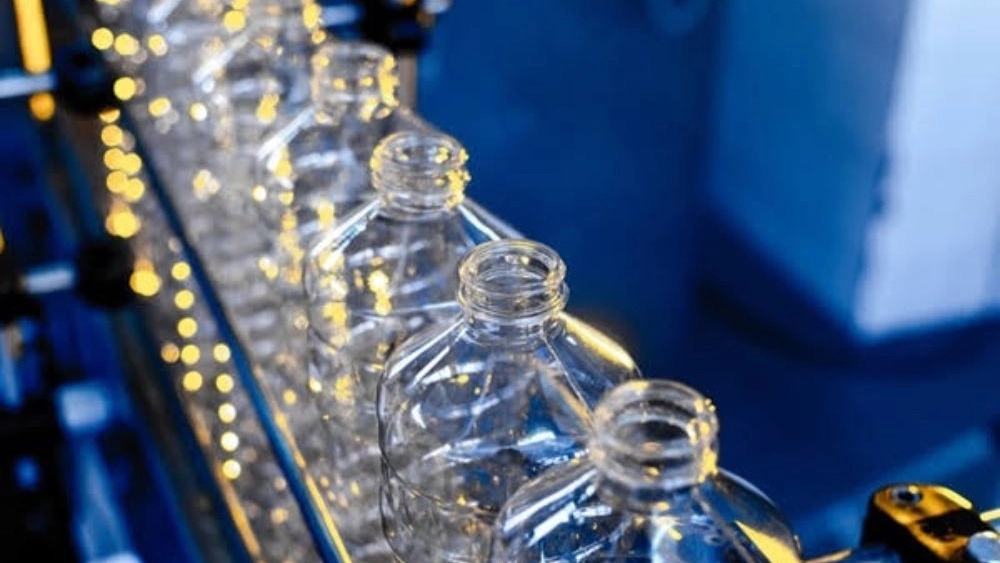
In today's competitive world, the packaging industry is one of the most dynamic and important production sectors. Among diverse raw materials, polyethylene terephthalate (PET) has become the undisputed king of the bottling industry due to its transparency, strength, and recyclability. For manufacturers who intend to enter this field or upgrade their production line, the installation and operation of the PET blowing machine is one of the most sensitive and critical steps. A correct installation guarantees product quality, reduces waste and increases the life of the device. In this article, together with the experts of Azar Pet, we will carefully examine the steps, technical points and principles of setting up these advanced machines in order to draw a clear path for Iranian manufacturers.
Strategic importance of proper setup of PET blowers
Before getting into the technical details, we need to understand the importance of this step. The PET inflator is a complex mechatronic system that includes pneumatic, hydraulic, electrical and mechanical parts. Setting up a PET inflator is not just about connecting some cables and taps; Rather, it is the art of harmonizing different parameters to achieve thermal and pressure balance.
If the installation process is not done carefully and by professionals, there may be problems such as unevenness in the bottle body, changes in the bottle volume, blurring of the product and even costly failures in mechanical parts such as molds. Therefore, investing in a professional installation is not really an expense, but an investment in the future of the production line. Credible and experienced authorities in this field, such as Azar Pet, always emphasize that compliance with the manufacturer's standards on the first day will greatly reduce maintenance costs in the following years.
Prerequisites and preparation of the workshop environment before installation
Success in the installation and operation of the PET blowing machine depends directly on the environmental conditions and the infrastructure of the factory. Before the device enters the production hall, a detailed checklist must be implemented by the engineers so that the setup process does not face challenges.
Power supply and earthing
Modern blowers, especially fully automatic models, have significant power consumption, especially for the heater systems that are responsible for heating the props. The input power should be stable and the voltage fluctuation should be within the standard range. One of the most important points that is often overlooked is the proper grounding system. PET inflator devices have sensitive electronic parts and precise sensors that are at risk of sudden burning if not properly earthed.
Facilities and air conditioning system
The PET blowing process is a thermal process. The device heats up and a significant part of this heat energy is transferred to the hall environment. For the correct operation of the device and the cooling of electric motors and drives, a suitable ventilation system is needed. Also, the air compressor, which is the beating heart of the inflator, needs cool and clean air so that its temperature does not exceed the permissible limit. Therefore, the proper design of the ventilation system is an integral part of the steps before installing and starting the PET inflator.
Providing quality compressed air (Air Compressor)
The quality of compressed air is critical in the production of PET bottles. Compressed air should not contain moisture, oil or suspended particles. The presence of moisture in the compressed air can cause freezing in the blowing nozzles at the moment of rapid expansion of the air and greatly reduce the quality of the bottle. It is mandatory to use dehumidifier dryers and air filters in the compressed air supply line.
Step-by-step steps to install the PET blower
After preparing the environment, it is time to enter the device and start the physical installation operation. These steps require precision and patience and are usually carried out by the technical team of the manufacturer or its authorized representatives.
1. Moving and placing the device (Positioning)
The PET inflator is usually shipped in one piece or in separate parts. The first step is to place the machine in the designated location on the factory floor. The alignment of the device is very important at this stage. The device must be perfectly horizontal with the use of leveling screws and precise leveling tools. The lack of alignment of the device can cause severe vibrations at high speeds and wear of mechanical parts.
2. Mechanical and pneumatic connections
In the next step, connections are established between different parts of the device (such as the blower part and the molding part or manual robots). Pneumatic hoses, which are responsible for transferring compressed air to cylinders and nozzles, must be tightly closed and leak-free. Air leakage not only causes energy waste, but also causes pressure drop at the moment of inflator and production of defective bottles.
3. Electrical wiring and connections
The electrical team should connect all the main cables, controllers (PLC), sensors and motors according to the wiring diagrams. At this stage, short circuit test and cable insulation test should be done. After making sure that the connections are correct, the main power is connected to the device, but the start button is still not pressed. First, the rotation direction of the motors and the input voltage to the drives should be checked.
Initial setup and production parameters settings
Once the physical installation is complete, the critical step of setting up the PET blower begins. This stage is where the experienced engineer prepares the device for production by adjusting the software and hardware parameters.
Oven settings
One of the most important parts is adjusting the temperature of the infrared lamps in the furnace. PET preform must be heated uniformly to find the necessary elastic properties for blowing. If the temperature is too high, the preform will melt or turn yellow (degrade) and if it is low, it will crack at the moment of blowing or the formation will not be complete. The engineer must adjust the temperature of each area of the furnace individually according to the thickness of the preform and the speed of the line.
Adjusting the blowing pressure
PET blowers usually have two pressure stages: Pre-blow and High Pressure. The initial pressure makes the preform stretch, and the final pressure with high pressure (usually between 30 and 40 bar) brings it to the final shape of the mold. Accurate timing between these two pressures is the key to producing a bottle with uniform and resistant walls.
Mold path settings
The molds of the device must be properly adjusted so that the heated preform is placed exactly in the center of them. Any deviation in this step will cause the bottle wall to be thin on one side and thick on the other side. Also, checking the mold cooling system (Water Cooling) is necessary; Because the mold must have a certain temperature so that the bottle hardens quickly after blowing and keeps its shape.
Basic troubleshooting and fixing of common setup problems
Even with the best installation, there may be challenges in the first days of set-up of a PET inflator. The ability to quickly diagnose these problems and fix them shows the expertise of the technical team.
Problem: incomplete blowing or not reaching the bottom of the mold
This problem is usually caused by low compressed air pressure, low preform temperature or premature closing of the mold. Checking the compressor pressure and increasing the temperature of the lower area of the furnace usually solves this problem.
Problem: White lines or cloudiness in the bottle body
This complication is often due to moisture in the performance or compressed air. PET preforms are hygroscopic and must be placed in a hopper dryer before use. Also, too much cooling of the preform before final blowing can cause cloudiness.
Problem: sticking the bottle to the mold
If the bottle sticks to the mold, there is usually a problem with the mold cooling system or the mold temperature is too high. It is necessary to check the circulation of water in the mold channels and the temperature of the incoming water.
The role of personnel training in production sustainability
After the successful installation and commissioning of the PET inflator, the job is not over. The most important next step is to transfer the knowledge to the machine operators. The operator must be familiar with the control panel (HMI), how to change the parameters, the methods of setting the mold and the principles of work safety.
An untrained operator can produce thousands of waste bottles or damage the machine in minutes with one wrong setting. The holding of training courses by technical experts and the use of manuals guarantee the continuation of quality production. Leading companies such as Azar Pet offer comprehensive training courses along with the delivery of the device to customers so that they can benefit from the full capacity of the device.
Preventive maintenance (PM) for continued performance
Setting up a PET blowing machine is the beginning of a long journey. In order for the device to work for years without quality loss, a regular maintenance and preventive maintenance program should be implemented. This program includes the following:
- Regular lubrication: Gearboxes, bearings and pneumatic cylinders should be lubricated according to the schedule.
- Filters replacement: Compressor air filters and machine air filters should be replaced in time to prevent contamination.
- Sensor inspection: Optical and mechanical sensors should be cleaned and adjusted, because the slightest displacement They can disrupt the working cycle of the device.
- Checking Solenoid Valves: These valves are consumable parts and after a while they need to replace the internal kit or the entire valve.
Why choose Azarpet for our equipment?
Choosing the right business partner in the plastic industry is as important as the device itself. With years of experience in the field of supplying machinery and equipment for the petrochemical and plastic industries, Azerpet Group is a reliable partner for Iranian manufacturers. This collection brings reassurance to investors by providing expert advice, from the stage of selecting the device to installing and setting up the PET inflator and after-sales support.
The expert technical team of Azerpet offers optimal and cost-effective solutions with a complete understanding of the climatic conditions and the industrial environment of Iran. The use of quality and standard parts guarantees the long life of the devices and the reduction of production stops. To view more products and services, you can visit the website https://azarpet.com.
conclusion
Finally, installing and operating a PET inflator is a process that requires a combination of technical knowledge, practical experience and strict adherence to standards. From preparing the factory infrastructure to fine-tuning the heat and pressure, each step has a direct impact on the final product quality and profitability of the production line. By understanding the importance of these steps and choosing expert colleagues, manufacturers can take strong steps towards the development of the country's packaging industry. Paying attention to the points mentioned in this article and using the power of expert consultants will make the path to success smoother.